Against breathlessness
What, to you, are games?

What, to you, are games? Are they more tech than art or vice versa? Do you approach them more like an iPhone or imagination? Do you think they ought to be evaluated or critiqued? Do you like them as a product or process? Do you want them wide or deep?
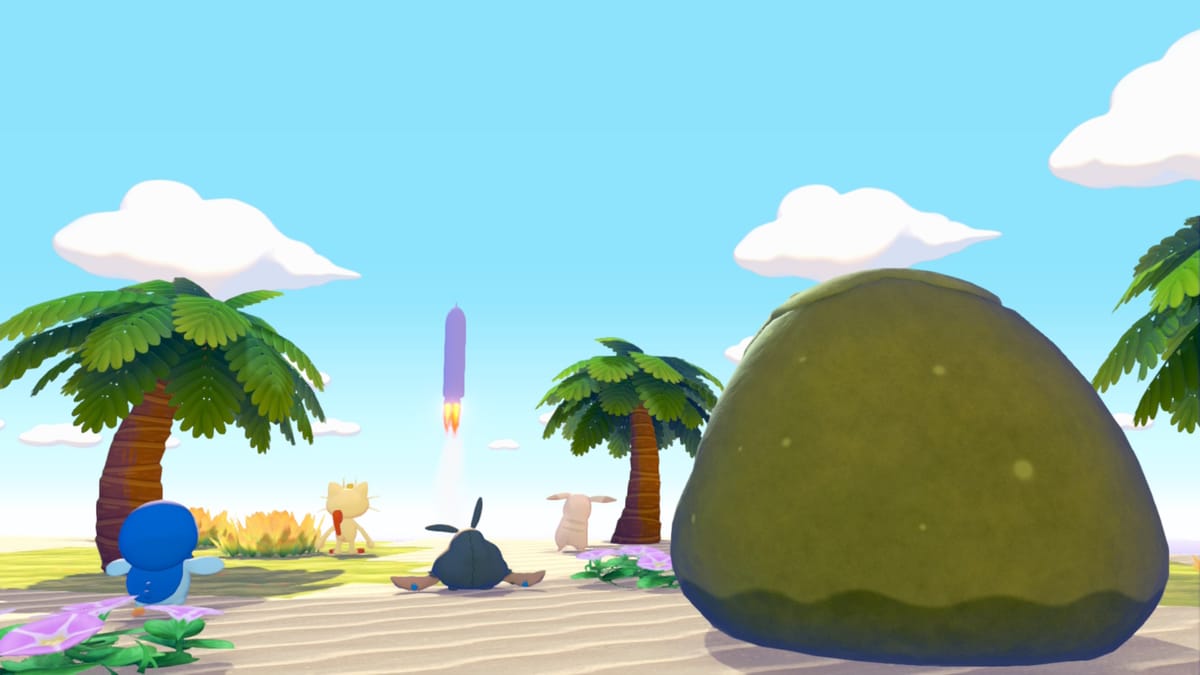
You'd think I would be an art guy, but increasingly I'm not. I've been burned too many times by people telling me that a game means something it obviously doesn't. I'm sorry, but Pokopia isn't a meditation on a post-human world and the ravages of climate change. Pokopia is a tidying sim with some writing that asserts a few things. Its central experience is not meditation; it is pleasurable busywork. Pokopia is laundry day. Pokopia is power washing dressed in recognizable IP from your youth. I like Pokopia, but it ain't deep.
If you're an art guy, you might think I'm being too harsh. I guess. But I think you're being too breathless. I'd like us all to be more real about these things. They're not all time-wasters, but a lot of them are. I think we need to start acknowledging that too many adults are evaluating games like they're up for the Booker Prize when instead they're well-constructed children's books. We don't need to pretend. We'd be better off being real.
We don't need to pretend that the latest Resident Evil is a trenchant reflection on whatever. We don't need to claim that Pokopia justifies one's purchase of a Switch 2. (Spoiler: There's no way to justify a purchase! It's just a purchase! You did it! It's over! You spent money! Be free!) We don't need to claim a one-person-but-secretly-many-people dev team is the savior this industry needs. We don't need to say something is deep when we mean it's engaging. Those are different things, and we do a disservice to the medium, and to each other, when we pretend otherwise.
I don't know shit about Crimson Desert, but it seems very much like a videogame. It's soulless and gluttonous, so I hear, but can we tell the truth? So are most games. Even our darling Pokopia is a bit of a time-waster. Sure, its 25–30-hour campaign is pleasurably paced and dapper in its dressing, but at the end of the day, it too employs events and daily goals meant to keep us on that most familiar of gaming experiences: the treadmill. You get on for a certain amount of time, do as much work as you feel like doing, and then you get off. I'm a guy who likes treadmills, so this isn't necessarily an insult. It's honesty.
If social media has taught us anything besides the bottomless narcissism of the ultra-wealthy, it's that it's easier to be against something than for something. So let me be for something. Can we get real about what games are good at versus what they're not good at? Can we create more space for criticism that doesn't take as an a priori that games are worthwhile by default? Can we focus less on hours as value and more on innovation as merit? And can we stop being so goddamned breathless when we like something? I'll try. Here goes:
Pokémon Pokopia is a game that cleverly metes out its complexity over the course of 20–30 hours of onboarding. It feels like getting to know a new place of work: Here are all the people, here's what they do, and here's where you fit into all of this. You enjoy your first few weeks at the company. It's new, it's different, the people are nice, the work is pleasant and varied. Then, after that time, you're left with the realization that it's only work. That every new workplace is only a workplace. You see things more clearly. You've been doing a job this whole time, and now the real work begins. You have to sustain yourself. Challenge yourself. Grow yourself. That everything is dressed up as Pokémon doesn't change the fact that Pokopia is one more game about tasks. It avoids the pratfall of overwhelming the player, but it can't surpass that final feeling that all games of this ilk eventually reach. You're here to work. Now, get to it.